 PawSteps
A tale of spikes, stars, and one very brave night.
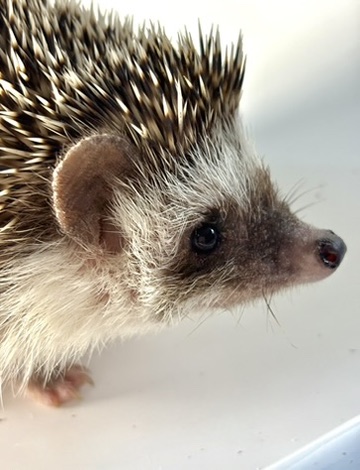
Gary was, without question, the prickliest hedgehog in the shop. He knew this because of the way people looked at him — the same way you might look at a cactus someone had wrapped as a present.
His tank had a sign on it. GARY, it said, in cheerful bubble letters, with a little drawing of a smiling hedgehog underneath. Gary felt the drawing was wildly inaccurate. He had never smiled in his life, and he wasn't about to start for a felt-tip pen.
He had been at Pemberton's Pets longer than anyone. Longer than the budgies, who never stopped talking and never once said anything. Longer than the goldfish, who had no memory and therefore, lucky things, no regrets. Longer, even, than Dennis the enormous shop cat, who Gary suspected had simply come with the building, like the radiators.
Hedgehogs of the sort you buy in a shop are called African pygmy hedgehogs. They are small enough to sit in two cupped hands, and prickly enough to make you wish you hadn't. Gary was the smallest of a small bunch and the grumpiest of a grumpy one, which was a kind of record, if you thought about it. Gary tried not to think about it.
Every Saturday it was the same. Families came in, smelling of rain and sweets, and the shop put on its show. The puppies wagged. The rabbits did the thing with their noses that made grown-ups go soft in the knees. And Gary — well.
The moment a hand drifted towards his tank, Gary did what Gary always did. He pulled in his small black feet, tucked down his small black nose, and rolled himself into a tight, bristling ball, every spike standing to attention. Then he huffed. It was a small sound, like a kettle that had given up halfway, but it did the job.
"Ooh," the children would say, snatching their fingers back. "That one's not very friendly."
"No," Gary would think, from somewhere deep inside his ball. "That one is not."
And he told himself he didn't mind. Spikes were sensible. Spikes were a wall, and walls kept things out, and the things Gary wanted kept out were, broadly speaking, everything. He didn't need a family. He didn't need a name in bubble letters or a warm hand or a window of his own to watch the world from. He had his spikes, and his spikes had never once let him down.
It was only at night, when the shop went dark and quiet and the last car had hissed away down the wet road, that Gary let the ball uncurl. He would creep to the glass and watch the empty shop, and the empty tanks of all the animals who had been chosen that week and taken somewhere with carpets and names called up the stairs. And the tank, which was exactly the same size it had always been, somehow felt a little bigger each time.
Being chosen, Gary had decided long ago, was for softer animals. He was not soft. He was, in fact, the prickliest hedgehog in the shop — and if nobody was ever going to want him, then he would simply want nobody right back. That was the plan. It was a very good plan. He'd had a lot of time to work on it.
The boy came in on a Tuesday, which was unusual, because Tuesdays were quiet and quiet people came on Tuesdays.
He was about nine, with hair that didn't agree on a direction and a coat that was a size too big, the sort of coat you grow into rather than wear. He came in behind a woman Gary took to be his mum, and the first thing Gary noticed was that the boy did not run to the puppies.
Everybody ran to the puppies. It was practically the law. But the boy hung back near the door, both hands deep in his too-big pockets, watching the shop the way Gary watched the shop — like somewhere he wasn't quite sure he was allowed to be.
"Go on, Milo," said his mum, gently. "Have a look. You can choose. Remember? We talked about it."
Milo nodded, but he didn't move much. He drifted along the tanks slowly, not tapping the glass, not making the kissing noises people made at the rabbits. He just looked. And the animals, who could tell a tapper from a looker at fifty paces, looked back at him, calm.
He stopped at Gary's tank.
Gary, on instinct, began to curl. Feet in. Nose down. Here we go again. He braced for the hand, the snatch, the "ooh, not very friendly."
But the hand didn't come.
Milo crouched down instead, so his eyes were level with the glass, and he didn't reach in at all. He just stayed there, very still, looking at the small cross hedgehog who was halfway through becoming a ball.
"It's all right," Milo said. Quietly. Almost to himself. "You don't have to."
Gary paused. This was not in the script. The script said the hand, then the snatch, then the leaving. He stayed half-curled, one suspicious eye on the boy, waiting for the trick.
There was no trick. Milo read the sign. "Gary," he said, and the corner of his mouth moved, just slightly. "You look how I feel."
"What does that mean?" thought Gary, who did not like being read like a sign.
"Mum," Milo called, without taking his eyes off the tank. "This one. I want this one."
His mum came over, and her face did a complicated thing. "Are you sure, love? The man said that one's a bit — he said he doesn't really like being handled. Doesn't come to people. He's been here a long time."
"I know," said Milo. "That's why."
And from inside his half-curl, the prickliest hedgehog in the shop felt something he had no spikes for at all — a strange, unwelcome, hopeful little ache, somewhere underneath all that armour, in a place he'd been very careful never to let anyone near.
The journey was a catalogue of horrors.
First there was the box, which smelled of cardboard and panic. Then there was the car, which growled and lurched and threw the whole world sideways every few seconds. Gary spent the entire trip as a ball so tight he practically squeaked, certain that this was it, this was the end, he had finally been chosen and it was every bit as terrible as he'd always suspected.
The house, when the box finally stopped, was worse than the car, because it didn't make sense. It was enormous. It had echoes. It had a hundred new smells, all of them arriving at once and demanding to be identified. There was a sofa the size of a continent and a clock that ticked like a heartbeat that wasn't his.
Milo's room was at the top of the stairs. There was a brand-new cage there — bigger than the tank at Pemberton's, with a wheel and a little wooden house and a cosy fleece blanket that smelled of nothing yet, which meant it smelled of nobody, which Gary supposed was at least familiar.
He went straight into the wooden house and did not come out.
"That's okay," said Milo, lying on his front on the carpet with his chin on his hands, peering in. "You can stay in there as long as you like. I don't mind."
Gary minded. Gary minded a great deal. But he didn't have a spike for any of this, so he stayed in the dark of the little house and bristled at the world in general.
Days passed. Milo did not grab. He did not poke. He did not, despite Gary fully expecting it, get bored and give up. Every evening he sat by the cage and talked — not in the silly squeaky voice people used on animals, but normally, the way you'd talk to someone on the next bus seat. He told Gary about school, which sounded, to Gary, like a sort of pet shop for children, full of being looked at and not quite fitting. He told him about how he didn't have many friends. He told him things, Gary suspected, that he hadn't told the people who could talk back.
"They put me at a table on my own sometimes," Milo said one night, very quietly, to a wooden house with a hedgehog hidden inside it. "Not as a punishment. Just because. I pretend I don't mind."
Inside the house, in the dark, Gary went very still.
Because he knew that one. He knew that one all the way down to his smallest spike. Pretending you don't mind. He was the world champion at it.
That night, after the light went out and Milo's breathing went slow and even, Gary crept to the door of his wooden house and looked out at the boy asleep on the bed, one arm hanging down towards the cage, as if even sleeping he was keeping an eye out.
And Gary thought — only thought, mind, he wasn't ready to do anything as reckless as feel it — that perhaps the boy had a point. That perhaps two animals who didn't fit anywhere might, just possibly, fit next to each other.
Then he went back inside and curled up, because thoughts like that were dangerous, and a sensible hedgehog kept his spikes up. Even so. He left the door of the little house open. Just a crack. Just in case.
Hedgehogs are creatures of the night, and Gary was no exception. While Milo slept, the room belonged to him.
It started small. One paw out of the wooden house. Then two. Then a quick, suspicious patrol of the cage, nose down, reading the floor like a newspaper. The wheel, which he had been ignoring on principle, turned out to be — and Gary would deny this under any questioning — quite good fun, in a pointless sort of way.
On the third night, Milo left something new in the food bowl. A single mealworm, fat and wriggling, the hedgehog equivalent of the most delicious cake you have ever seen. Gary glared at it for a full ten minutes, certain it was a trap.
It was not a trap. It was just a mealworm. It was, in fact, the best thing Gary had ever eaten, and the next night there was another, and the night after that, and slowly, without quite deciding to, Gary began to look forward to the dark — not because the boy was asleep, but because the boy had thought of him before he fell asleep.
By the end of the first week, Gary had learned the geography of the bedroom from the safety of his cage: the cliff of the bed, the plains of the carpet, the mysterious cave under the desk where odd socks went to retire. He longed to explore it. He told himself he didn't.
Then, one night, he discovered the door of his cage had not been properly latched.
Now. A sensible hedgehog — a hedgehog with his spikes about him — would have stayed put. Gary was, he reminded himself firmly, a deeply sensible hedgehog.
He was out of the cage in under a minute.
What a night it was. He trundled across the great plain of the carpet. He investigated the sock cave (disappointing; mostly socks). He climbed a small mountain of school books and stood at the summit, king of all he surveyed, which was one boy's bedroom, but still. For the first time in longer than he could remember, Gary was not behind glass and not inside a ball. He was just out, in the world, being a hedgehog, and it was glorious.
He should have stopped there. He'd had his adventure. He could have trundled back to his cage, climbed in, and no one would ever have known.
But the bedroom door was open a crack, and beyond it the dark landing breathed with a hundred new smells, and Gary the Prickliest Hedgehog in the Shop, who had spent his whole life keeping the world out, found that he very badly wanted, just this once, to go and meet it.
He slipped through the gap and out into the rest of the house.
He did not know it yet, but it was the most dangerous decision he would ever make.
The house at night was a different country.
The landing led to the stairs, and the stairs were a problem Gary solved the only way a hedgehog can: by tucking in and rolling, bump by bump, all the way to the bottom, where he uncurled feeling sick and rather pleased with himself.
The hall. The kitchen, with its cold tiles and its smell of last night's dinner. And there — the cat flap.
It hung in the bottom of the back door, swinging very slightly in a draught, and through it came the most extraordinary smell Gary had ever encountered. Wet grass. Cold earth. Things growing. Things moving. The whole enormous outside, pouring in through a little plastic flap, calling to a part of Gary so old and deep he hadn't known it was there — the part that remembered, somehow, that hedgehogs are not supposed to live behind glass at all.
He should not have gone through. He knew he should not have gone through.
He went through.
The garden swallowed him whole. After the warm, bright, knowable house, the outside was vast and black and freezing, a wilderness of towering grass and looming shapes, and the cold reached straight through his spikes to his small surprised skin. Above him the sky went up and up and up with no ceiling at all, scattered with cold white stars, and Gary, who had thought he understood how big the world was, discovered he had not understood the first thing about it.
It was the most wonderful and most terrifying moment of his life.
He trundled forward, into the long wet grass, drunk on smells. A beetle here. A worm there. The garden was a feast and an adventure and a dream, and for a glorious half an hour Gary forgot to be prickly, forgot to be careful, forgot, even, to be Gary, and simply was a hedgehog under the stars, doing exactly what hedgehogs were made to do.
Then he turned to look back at the house, to fix it in his mind so he could find his way home —
— and realised he had absolutely no idea which dark shape it was.
The grass had closed behind him. Every direction looked the same: tall, black, endless. The warm flap, the cold tiles, the stairs, the boy asleep with one arm hanging down towards an empty cage — all of it had vanished, swallowed up by the wide, wild dark.
Gary was lost.
And he was not alone.
From somewhere in the shadows, low and patient and far too close, came a sound that turned his small blood to ice: the soft, padding footstep of something hunting.
The eyes appeared first. Two of them, round and yellow and glowing, low to the ground, drifting towards him through the dark with the dreadful slowness of a thing that knows its dinner can't get away.
A cat. Not friendly old Dennis from the shop, half-asleep on the till. A lean, hungry, wild-eyed cat, the kind that owned a garden and patrolled it, and did not share.
Every instinct Gary owned screamed the same word. Ball. And he did — feet in, nose down, spikes up, tight and round and bristling — the wall he had hidden behind his entire life, thrown up now between himself and a real and proper monster.
The cat circled. It batted at him, once, with a heavy paw, and yelped, and shook its stinging foot, and Gary felt a flicker of grim satisfaction. Spikes. He'd told them. Spikes were sensible.
But the cat was clever, and the cat was patient, and the cat did not give up. It settled down on its haunches a little way off, tail twitching, and simply waited. It knew, the way cats know things, that a hedgehog cannot stay a ball forever. Sooner or later Gary would have to uncurl. And it would be there when he did.
Time passed. The cold crept deeper. Gary's small muscles began to ache, and shake, and burn, and still the cat waited, patient as winter, and Gary understood with a horrible clarity that his wall was not going to save him this time. A wall only works if the danger goes away. This danger wasn't going anywhere. He could stay curled and freeze, or uncurl and be caught. The spikes that had kept the whole world out had finally kept him in, in a tight, doomed little ball, with nowhere left to go.
And then, in the smallest, most frightened corner of himself, Gary had a thought he had never had before.
What if the spikes weren't the answer?
What if, just this once, the answer was to do the most terrifying thing he could possibly imagine — and move?
There was a drainpipe. He'd noticed it on the way in, a dark gap at the bottom of the garden wall, too small for a cat, just big enough for a small and desperate hedgehog. To reach it he would have to uncurl. He would have to run, in the open, past those yellow eyes, faster than he had ever run in his careful, curled-up, behind-glass life.
It was the worst idea he had ever had.
Gary took a breath. He thought of Milo, asleep with one arm hanging down. He thought of the mealworm left in the bowl by someone who'd remembered him before sleep. He thought: I am not just a ball of spikes. I never was. I just never found out.
And the prickliest hedgehog in the shop did the bravest thing a hedgehog can do.
He uncurled — and he ran.
The cat was fast. Gary was faster than he had any right to be, but the cat was faster, and the garden was long, and the drainpipe was a hundred miles away across a sea of black grass.
He ran. He heard the cat spring. He felt the wind of a paw miss him by a whisker and he did not look back, because looking back is for animals who have given up, and Gary, it turned out, had not given up at all. He had spent his whole life believing he was a coward who hid. He was discovering, at top speed, in the freezing dark, that he had simply never been given anything worth being brave for.
Now he had.
Halfway to the wall, he did something the cat did not expect. He stopped — and curled — exactly as the cat pounced, so that it landed full on a bristling ball of spikes and shot backwards with a screech you could probably hear three gardens away. And in the half-second the cat spent yowling and licking its nose, Gary uncurled and ran again, and this time he did not stop, not for anything, until the cold mouth of the drainpipe swallowed him up and the furious, scrabbling paw behind him could reach nothing but air.
He had made it. He pressed himself into the dark of the pipe, heart going like a drum, and he was lost, and freezing, and a very long way from home — but he was alive, and he had done it himself, and no wall had saved him. He had saved himself by leaving the wall behind.
He did not know that, at that very moment, a light had come on in an upstairs window.
Milo had woken to find the cage door open and the cage empty.
For Milo, this was its own kind of dark. He was a boy who found it hard to knock on a friend's door, hard to put his hand up in class, hard to ask a grown-up for anything at all. And now, in the middle of the night, the one creature in the world who had chosen to need him was gone, out into a garden full of dangers — and the only way to find him was to do every single thing that frightened Milo most.
He woke his mum, when waking people felt like a crime. He went out into the dark garden, when the dark garden was the stuff of his worst dreams. And then, torch shaking in his hand, he did the most impossible thing of all: he went next door, and the door after that, knocking on strangers' houses at one in the morning, his voice small but refusing to stop, asking everyone the same thing.
"Please. I've lost my hedgehog. His name's Gary. Have you seen him? Please will you help me look?"
And one by one, in their dressing gowns, with their own torches, the neighbours came out into the night — a whole street of them, gathering in gardens, calling softly into the hedges — because a frightened boy had been brave enough to ask.
Two creatures who had spent their whole lives hiding behind their own kind of spikes had, on the very same night, in the very same dark, finally chosen to come out from behind them.
Now they just had to find each other.
Gary heard him before he saw him.
Through the long cold hours in the drainpipe, Gary had been doing sums. He could stay where it was safe and slowly freeze. Or he could go back out into a garden that had nearly eaten him, and try to find a house he couldn't see, past a cat that wanted revenge. Neither sum had a good answer.
And then, drifting across the dark garden, thin and wobbling and the most wonderful sound he had ever heard, came a voice.
"Gary? Gary, please. It's me. It's Milo."
It was not a squeaky animal voice. It was just Milo, talking the way he always talked, as if Gary were someone worth talking to. And Gary, who had spent his whole life believing that nobody would ever come looking — that being chosen was for softer animals, that he didn't need anyone, that the wall was the only safe place to be — heard the boy calling his name into the dark, again and again, refusing to give up on a small cross hedgehog who'd done nothing his whole life but bristle.
Gary came out of the drainpipe.
It was the second-bravest thing he did that night, and in some ways it was harder than the first, because running from a cat is just fear, and a hedgehog knows fear. But trundling out of his hiding place towards a voice, hoping, letting himself hope — that was something else. That was lowering the wall on purpose. That was trust, and Gary had never once in his life tried it.
He followed the voice across the freezing grass, past the wall, past the towering flowers, his small legs aching, until he came out into a circle of torchlight — and there was Milo, in his too-big coat over his pyjamas, on his knees in the wet grass, and his whole street behind him with their lamps and their dressing gowns, all gone suddenly quiet.
"Gary," Milo breathed.
Gary stopped in front of the boy. And here was the moment. Here was where, for his entire life, Gary had curled into a ball. The hands were coming. The eyes were all on him. Every instinct said the same old word — spikes, ball, wall, hide.
Gary did not curl up.
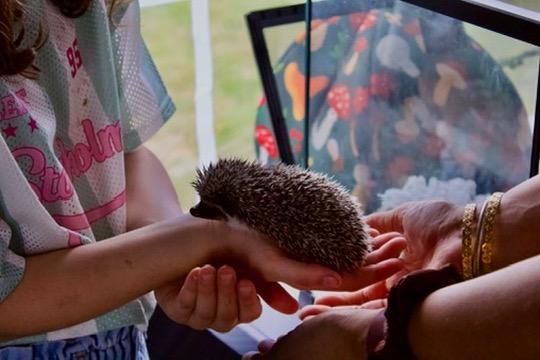
He walked the last few steps, right up to the boy he had chosen and been chosen by, and he pressed his small cold nose into Milo's waiting hands — spikes down, soft side out, every wall lowered — and let himself, for the first time in his prickly little life, be picked up and held.
"You came back," Milo whispered, holding him gently, the way you hold something you were terrified you'd lost.
"So did you," thought Gary, who could not say it, but pressed a little closer so the boy might somehow understand. "So did you."
And around them in the cold and the dark, a whole street of strangers in dressing gowns began, very softly, to clap.
Things did not change overnight, because they never do, and besides, Gary had a reputation to protect.
He was still, to almost everyone, the prickliest hedgehog you could hope to meet. When Milo's nan visited and reached in to give him a pat, Gary curled up and huffed like a tiny angry kettle, exactly as before. When the cat from next door — fully recovered, slightly wiser — strolled along the garden wall, Gary bristled on principle. The spikes, after all, were still sensible. The spikes still had their uses.
But the spikes weren't the whole of him any more, and they never had been. That was the thing he'd learned in the wide, wild dark: a wall is a fine thing to have, as long as you remember that you, and not the wall, get to decide when to come out from behind it.
So at night, when the house went quiet, Gary no longer hid in his wooden house with the door shut tight. He waited at the bars for the boy, and when Milo lay down on the carpet with his chin on his hands and told him about his day — about the table he didn't sit at on his own any more, about the boy at school who'd asked if he wanted to swap stickers, about all the small brave doors he was learning to knock on — Gary uncurled, and listened, soft side out.
Word got around, the way it does. The story of the lost hedgehog and the whole street that came out to find him travelled from garden to garden and door to door. Children Gary had never met would press their faces to the window to catch a glimpse of him, the famous one, the brave one, the prickliest hero in town. Gary pretended he found this deeply annoying. (He did not entirely find it deeply annoying.)
And Milo — quiet, overlooked, table-on-his-own Milo — found that it is hard to stay invisible when you are the boy who knocked on every door in the street at one in the morning to save someone he loved. People looked at him differently now. He found, to his own great surprise, that he could look back.
They had both come out from behind their spikes, and they had both lived to tell the tale, and neither of them, it turned out, had needed to be any softer or any braver than they already were. They had just needed someone worth lowering the wall for.
On the night this story ends, Milo fell asleep mid-sentence, the way he sometimes did, one arm hanging down off the bed towards the cage.
And the prickliest hedgehog in the shop — who was nobody's hedgehog now but Milo's, and very much wanted to keep it that way — crept to the bars, and reached up with one small cold nose, and very gently, very carefully, spikes all the way down, touched the boy's sleeping hand.
Just so he'd know. Just in case.
Then Gary curled up, warm and safe and chosen at last, and went to sleep, and dreamed of stars.
Gary went to sleep, warm and safe and chosen at last — and dreamed of stars.