Everything you need to learn about staying safe, kind and smart online — lessons, activities, and expert resources from Childnet for every age group.
The SMART rules help you remember the most important ways to stay safe online. Gary the Hedgehog says: learn these by heart!

"When I feel unsafe, I curl into a ball and wait until it feels safe again. Online, you can do something similar — stop, close the screen, and tell a grown-up you trust. You will never get into trouble for telling!"
Some secrets make us feel happy (surprise parties!). Some secrets feel yucky and wrong. We should never keep secrets that make us feel bad or scared — especially about people trying to contact us online.
Your name, your address, your school, your phone number and photos of yourself are private. They belong to you and your family. We do not give them to strangers — online or in real life.
When we use tablets, phones or computers to talk to people, the same rules apply as real life. Kind words make people feel happy. Unkind words online can hurt just as much as in person.
Before going online, playing a game or downloading an app, we always ask a trusted grown-up first. This keeps us safe and means we're not accessing things that aren't right for our age.
A trusted adult is someone who makes you feel safe — a parent, carer, teacher or family member. If anything online makes you feel sad, scared or confused, you tell them straight away. You will never get in trouble for telling.
Our brains and eyes need regular breaks from screens. Being online is fun, but so are outdoor play, reading, drawing and spending time with animals! A good balance helps us sleep better and feel happier.
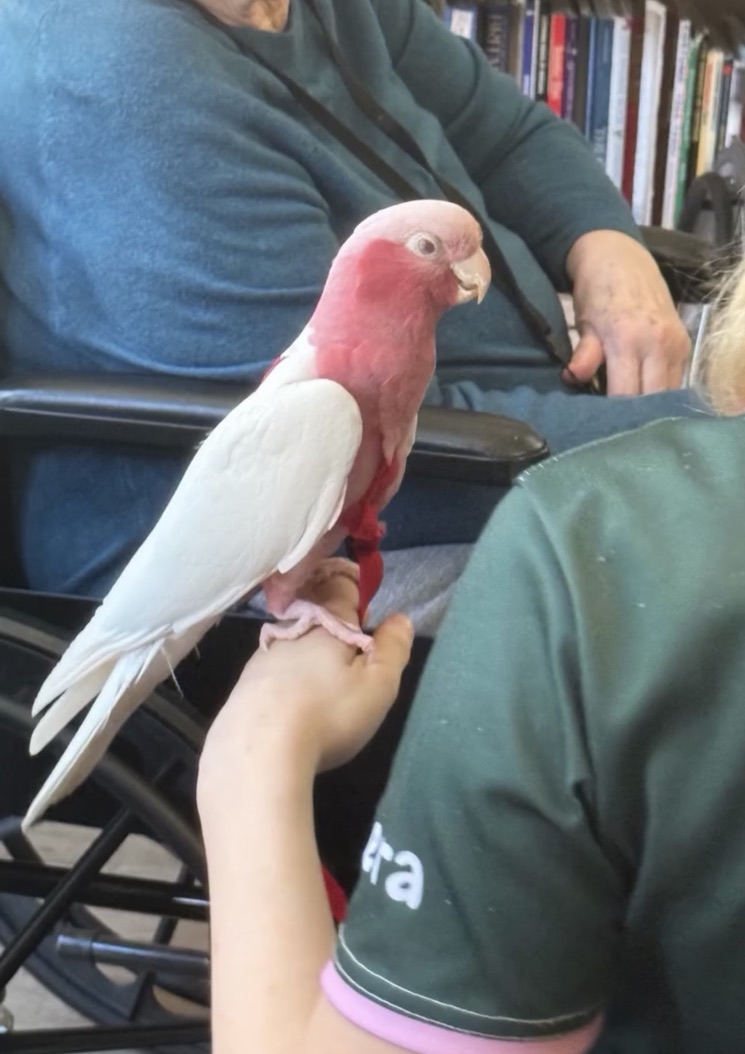
"Galahs live in huge flocks — we love being social! But even I know there are bad birds out there. Online, being social is brilliant, but always make sure you know who you're really talking to. Your digital flock should be people you actually know and trust."
Cyberbullying means using technology to deliberately upset, exclude or embarrass someone. It includes hurtful messages, sharing embarrassing photos, leaving people out of group chats, or spreading rumours online.
People online might not be who they say they are. Someone pretending to be a child might actually be an adult with bad intentions. Real friends are people you know in real life and trust completely.
Once you share a photo or video online, you lose control of it. It can be copied, changed or sent to people you never wanted to see it — and it can stay online forever.
Not everything you read online is true. Fake news, misleading adverts and made-up facts are everywhere. Always check information using a reliable source before believing or sharing it.
A strong password keeps your accounts safe. Never share your password — not even with friends. Use different passwords for different accounts. Enable privacy settings on games and social accounts.
Sometimes things pop up online that are shocking, upsetting or wrong — even when you weren't looking for them. This is not your fault. You should close the screen immediately and tell a trusted adult.
Many apps and games are designed to encourage you to spend money or click on adverts. Adverts are designed to look exciting — they are NOT always real or trustworthy.
Spending too long on screens can affect sleep, mood, concentration and friendships. Creating a healthy balance means time for outdoor play, reading, creativity and face-to-face time with family and friends.
Your online identity is made up of your username, avatar, what you post, what you like, and how you treat others. You are free to express yourself online — but that freedom has a limit: it stops where it harms someone else.

"I change colour to communicate how I'm feeling. Online, it's easy to pretend to be someone you're not — and others can pretend too. Your digital identity matters. Think carefully about the version of yourself you show online, and always question who is really behind a screen."
Everything you post, like, comment on or search for leaves a permanent trace — your digital footprint. Future employers, universities and even strangers can find this. Think of your online reputation as something you are building every day.
Sharing intimate, explicit or embarrassing images of anyone under 18 is illegal under UK law — even if the person consented at the time, even if it's yourself. This is called "youth-produced sexual imagery" and it carries serious consequences.
Grooming is when an adult builds a secret relationship with a young person online to exploit or harm them. Groomers are manipulative — they may spend weeks or months building trust, giving gifts, and creating secrecy before taking advantage.
Social media can make us feel great — and terrible. Comparing yourself to filtered, edited, "highlight reel" posts is harmful. Likes do not define your worth. Algorithms are designed to keep you scrolling — recognise when to step back.
Misinformation spreads faster than truth online. Before sharing anything, use the SIFT method: Stop, Investigate the source, Find better coverage, Trace claims back to the original context.
Most social media apps default to public settings. Check your privacy settings regularly. Who can see your posts? Your followers? Your location? Review app permissions — many apps request access to camera, microphone and location they don't need.
Healthy online relationships are built on respect, equality and honesty — just like real-world ones. Pressure to share photos, constant messaging demands, checking up on your location, or making you feel guilty for logging off are warning signs.
Hateful content targeting people because of their race, religion, gender or sexuality is illegal in the UK. Extremist content online can be designed to radicalise young people. If you see it — don't engage. Report it.
Childnet's "Free to be ME" lesson asks: is the internet a place where everyone is Fairly Treated, Represented, Equal and Empowered? Not always. Real barriers exist — discrimination, stereotyping, lack of representation. You can actively make it better.

"Sugar gliders can glide 50 metres — but we always land where we planned to, not just anywhere the wind takes us. Your digital life is the same. Make deliberate choices about where you go, who you follow, and what you share. You are in control."
The Online Safety Act 2023 and existing laws make it a criminal offence to share intimate images without consent. This applies to all ages. "Revenge porn," deepfakes of real people, and youth-produced imagery all carry serious legal consequences.
Research links heavy social media use to anxiety, depression and disrupted sleep in young people. Setting intentional boundaries — app limits, notification-free hours, social media-free days — protects your mental health long-term.
Radicalisation happens when someone is gradually drawn into extreme ideologies — political, religious, or otherwise. It often starts with content that feels exciting or rebellious. Recognising the process is the first step to avoiding it.
Employers and universities increasingly check candidates' social media. Your digital footprint follows you. Audit your accounts: adjust privacy settings, remove content you'd regret, and start building a positive online presence that reflects who you really are.
AI-generated content is increasingly realistic. Deepfake videos, AI-written misinformation and synthetic voices are used to mislead. Critical evaluation of media is now an essential life skill — question everything.
Consent applies online as much as in real life. Sharing someone's photos, tagging someone without asking, posting about someone's private life — all require consent. Enthusiastic, informed and ongoing consent is the standard.
These Childnet Education Packs are free to download and include lesson plans, assembly scripts, activities, and posters for every age group. PawSteps is proud to signpost these world-class resources.