Why Rosie is pink and white
A wild galah is pink and grey. Rosie — a real galah at Pets on the Green — is pink and white. One gene explains the difference, and explaining it properly takes you through recessive alleles, genotype versus phenotype, and the bird sex-chromosome system.
The same bird, one gene apart
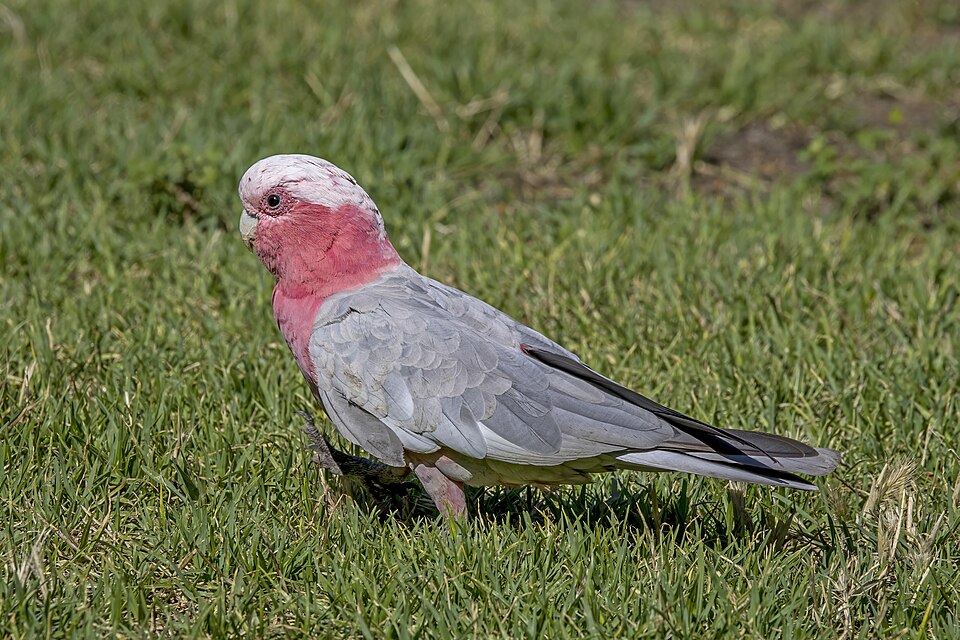 Wild typePink breast, grey back and wings
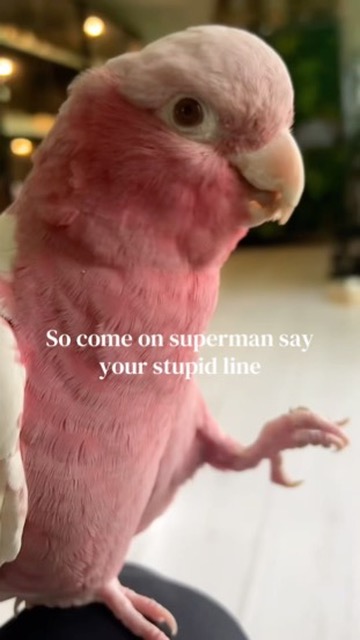 Rosie — lutinoPink breast, white where the grey should be
The grey in a galah's feathers is melanin. The pink is a different pigment entirely, and it is unaffected. A lutino carries a mutation in the gene for an enzyme in the melanin pathway — so no melanin is produced, the grey never appears, and the pink and the pale feather structure underneath are all that is left.
The pink was always there. Nothing has been added to Rosie. Something has been subtracted. That is worth pausing on, because students routinely assume a mutation adds a colour — most often, it removes one.
It is recessive — and it is on the sex chromosome
The lutino allele is recessive: one working copy of the gene makes enough enzyme, so a bird with one normal and one lutino allele looks completely normal. It is a carrier (aviculture calls this "split to lutino").
But birds do not use the XY system you learned for humans. Birds use ZW, and it is the other way round:
- Male = ZZ — two sex chromosomes the same (the homogametic sex)
- Female = ZW — two different (the heterogametic sex)
The lutino gene sits on the Z chromosome. So a female has only one copy of it. She cannot be a carrier: whatever single allele she has, she shows. A male needs two lutino alleles to be lutino, but only one to be a hidden carrier.
The consequence is testable and counter-intuitive: a normal-looking pair can produce a lutino daughter and no lutino sons at all — if the father is a carrier.
Cross them yourself
Pick the parents. The square shows the four equally likely offspring genotypes. ZL = lutino allele, Z+ = normal allele.
Why this matters beyond the exam
Sex-linked recessive inheritance is the same mechanism behind red–green colour blindness and haemophilia in humans — with the sexes swapped, because we are XY and birds are ZW. If you can predict Rosie's offspring, you can answer the human pedigree question, and you will understand why the affected sex differs rather than memorising which one it is.