A-Level Biology, through real animals
Each one maps to specification content (AQA/OCR/Edexcel Biology). The animal is not decoration — it is the reason the concept makes sense.
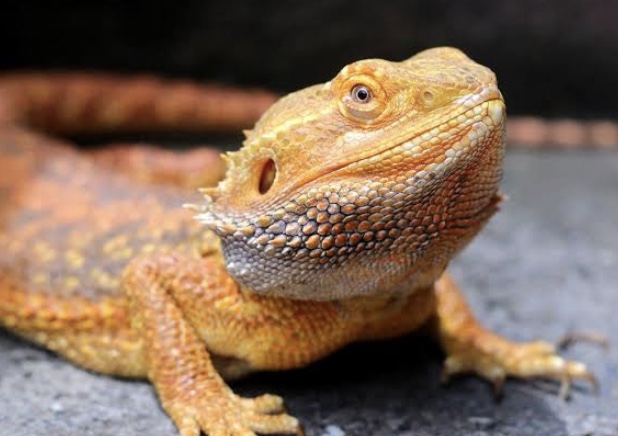 Homeostasis
Thermoregulation in a bearded dragon
Homeostasis
Thermoregulation in a bearded dragon
Ectotherms vs endotherms. this is a bearded dragon: he cannot make his own heat, so he must behave his way to the right temperature. Negative feedback, made visible.
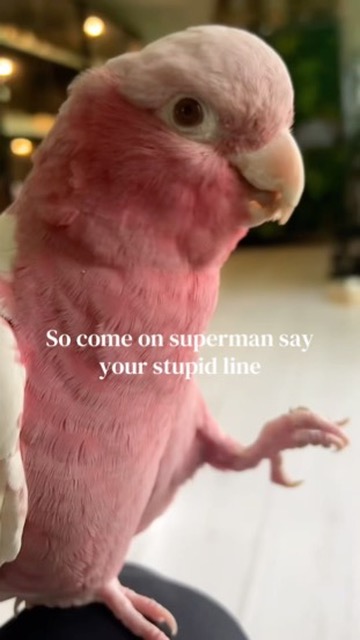 Genetics
Inheritance — why Rosie is pink and white
Genetics
Inheritance — why Rosie is pink and white
A wild galah is pink and grey. Rosie is a lutino: one mutation stops melanin being made, so the grey never appears. Recessive alleles, Punnett squares, genotype vs phenotype.
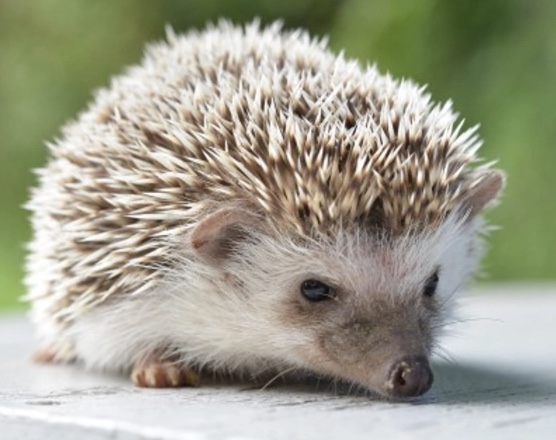 Ecology
Populations & interdependence
Ecology
Populations & interdependence
British hedgehog decline as a real dataset: habitat fragmentation, predation, road mortality. Sampling, abundance and the limits of the evidence.
Physiology Comparative body systemsGas exchange in a fish, a bird and a mammal — three solutions to the same problem. Surface area, counter-current flow, and why a bird's lung outperforms ours.
Digestion How different animals digest foodEleven of the animals we keep across five gut designs — hindgut fermenter, foregut, carnivore, and more. Caecotrophy, dentition, poisons and the maths of why big animals eat less than you'd expect. A full self-test with worked long answers.
Behaviour Innate vs learned behaviourWhy a hedgehog curls without being taught, and why a galah learns to say your name. Reflex, imprinting, conditioning — and the ethics of studying any of it.
Energy transfer Energy through a food webProducers, consumers, trophic levels and the 10% rule — built on a real British garden food chain rather than an invented one.
GCSE — through real animals
Full teaching units with worked examples and a real exam paper, built on the animals we keep. The teaching is free to read and print; the exam paper and mark scheme are Premium.
Structural, behavioural and functional adaptations, abiotic vs biotic factors, competition and interdependence — through hedgehogs, bearded dragons and tortoises. 35-mark paper.
Evolution Natural Selection, Evolution & ClassificationThe four-step sequence, antibiotic resistance, selective breeding, speciation, evidence and classification — through peppered moths, Aldabra tortoises and Darwin's finches. 45-mark paper.
Genetics Inheritance, Genetics & VariationGenotype vs phenotype, meiosis, Punnett squares, sex determination, inherited disorders and DNA — through hedgehog colour morphs and bearded-dragon sex ratios. 47-mark paper.
Ecosystems Ecosystems, Biodiversity & Human ImpactSampling and quadrat calculations, carbon and water cycles, decay, biodiversity, energy transfer and food security — with the turtle sex-ratio climate link. 49-mark paper.
English · Paper 1 English Language — Creative Reading & Writing (Paper 1)The four reading questions and the 40-mark creative task — language, structure, evaluation and descriptive writing — taught through an original fiction extract set in an animal centre. 80-mark paper.
English · Paper 2 English Language — Writers' Viewpoints (Paper 2)The paper post-16 students resit most — comparison, language analysis and viewpoint writing, taught through two real tortoise-keeping texts (a modern keeper vs an 1873 gentleman). 80-mark paper.
Maths · Ratio & Proportion Ratio, Proportion & Rates of ChangeAround a quarter of a Foundation paper, on every paper at both tiers — sharing in a ratio, percentages, best value, speed and density, exchange rates and proportion. 77-mark paper.
Biology · Cells Cell Biology, Transport & PhotosynthesisCell structure and specialisation, microscopy and magnification, cell division, diffusion, osmosis, surface area : volume, photosynthesis and respiration. 81-mark paper.
Biology · Homeostasis Homeostasis & ResponseThe nervous and hormonal control systems — reflex arcs, thermoregulation, blood glucose and diabetes, the kidneys and ADH, the endocrine system and the menstrual cycle. 71-mark paper.
Biology · Health Health, Disease & ImmunityCommunicable and non-communicable disease, pathogens, the immune system, vaccination, antibiotics and drug development — from Fleming's penicillin to the foxglove. 81-mark paper.
Chemistry · Atomic Structure Atomic Structure & BondingThe atom, the history of the model, electronic structure, the periodic table and its groups, ionic, covalent and metallic bonding, and giant structures. 70-mark paper.
Physics · Energy & Forces Energy, Forces & MotionEnergy stores and transfers, forces and free-body diagrams, F = ma, motion graphs, kinetic energy, momentum and terminal velocity — through real collisions and a skydiver. 76-mark paper.
Level 2 & 3 Animal Management
The vocational route — BTEC, T-Level and City & Guilds Animal Management. This is the part we can teach better than anyone, because it is our actual job.
Sixteen on-screen vocational units — species and husbandry, working safely, and the careers side: CVs, interviews, revision skills and pricing a round.
Revision Revision hub — KS4 / BTECFive full revision units: conservation and zoo management, first aid and health checks, health and parasites, nutrition and digestion, reproduction and behaviour.
Interactive Body systemsLabelled diagrams you work through system by system — skeletal, muscular, digestive, respiratory, circulatory.
Interactive Cells and tissuesCell structure and tissue types, with the pass / merit / distinction criteria written out.
Interactive Disease libraryA searchable library of diseases by type, species and zoonotic risk.
Interactive Parasite life cyclesDirect and indirect life cycles, animated stage by stage.
Practical Health check trainerRun a structured examination against a checklist and record what you found.
Practical Enrichment plannerPlan enrichment by species and behavioural need, then evidence whether it worked.
Practical Build a risk assessmentHazard, who is at risk, control measures, residual risk — the document every setting is asked for.
Livestock Livestock — health and moving animalsHealth, transport and the paperwork that goes with moving farm animals.
Business Workplace & promotionWorking in an animal setting: teams, communication and professional conduct.
Business Promoting an organisationHow an animal business or collection presents itself, and to whom.
Welfare Welfare, ethics & the lawThe Animal Welfare Act, the five welfare needs, and the ethical arguments you are expected to weigh.
Coursework Animal management courseworkHusbandry plans, welfare assessment and the evidence a moderator actually wants to see.
Portfolio Portfolio trackerTrack assignments against criteria, and keep the evidence in one place rather than in six folders and a phone camera roll.
Practical Health check & recordingRun a structured examination, record findings, decide a plan and sign it. The habit that every welfare qualification is really assessing.
Handling Handling & restraintSpecies-appropriate handling, stress signals, and knowing when the right decision is to put the animal down and walk away.
Careers Careers with animalsVeterinary nursing, zookeeping, welfare officer, behaviourist, wildlife rehab — what each one actually pays and what it actually asks of you.
Routes Qualifications & entry routesWhich qualification leads where, and the honest answer about which ones employers value.
Level 2 · Full unit Animal Welfare, Health & HusbandryA full Level 2 teaching unit — the five welfare needs, housing, feeding, handling, health checks and behaviour — with a 79-mark assessment paper and mark scheme. Teaching free.
Level 3 · Full unit Anatomy, Physiology & Advanced HusbandryA full Level 3 teaching unit — body systems, thermoregulation, nutrition and rationing, ecdysis, UVB and advanced welfare — with a 90-mark assessment and mark scheme. Teaching free.
Functional Skills — Level 1
Maths and English at Level 1, set entirely in real animal-care decisions. Full practice papers with mark schemes and teaching notes — genuinely taught through animals, not bolted on.
A 48-mark paper: setting up and feeding a hedgehog, boarding costs and pricing a party — money, means, area and multi-step reasoning, with the rounding decisions the exam really tests.
English · L1 Functional Skills English L1A 52-mark paper: read a hoglet advert against an honest care guide — fact vs opinion, purpose, what's been left out — then write an email and a magazine article.